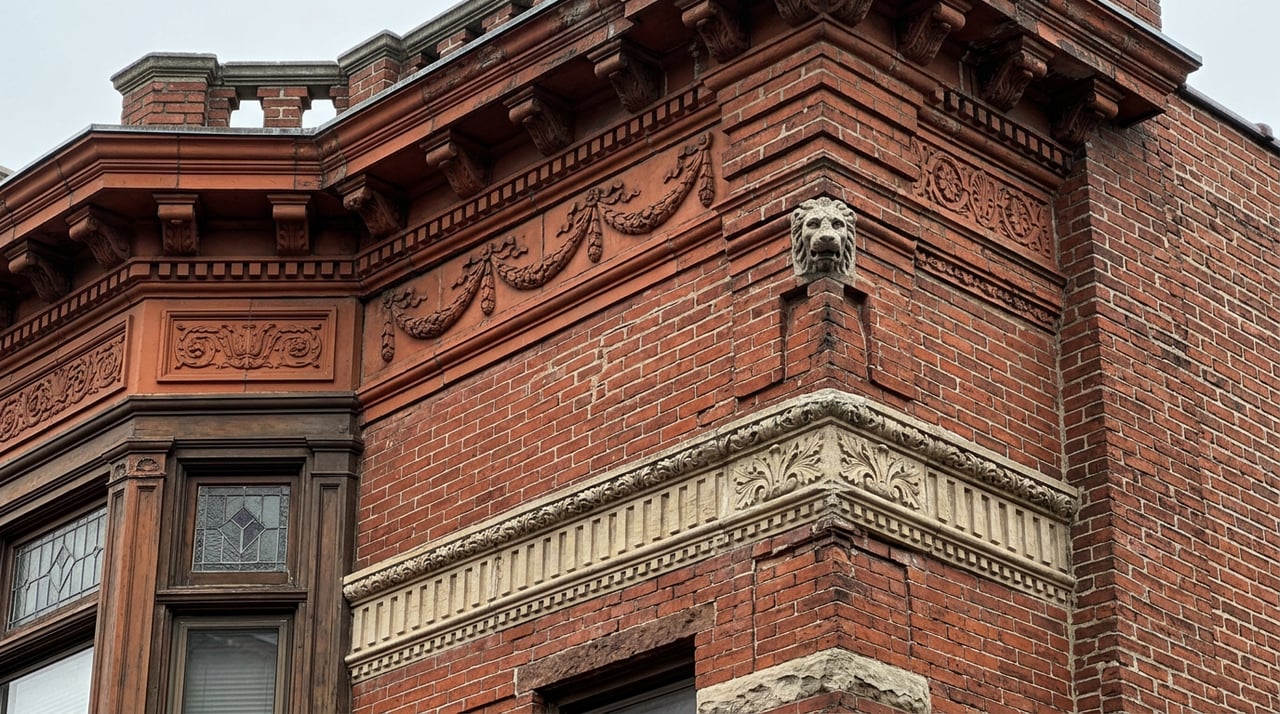
Georgetown Home Renovation: What Historic Approval Depends On
September 24, 2026
September 24, 2026
Most buyers assume a Georgetown renovation runs slow because the house is old. That's the wrong mental model. On the Commission of Fine Arts' own March 2026 consent calendar, a homeowner installing 33 rooftop solar panels ran straight into the actual rule: eight of those panels were visible from public space, and the Commission required them removed or reoriented before the permit could issue. Same roof, same house, same age.
That's the mechanism worth understanding before you write an offer on a Georgetown property with renovation upside, or before you schedule exterior work ahead of a listing. Georgetown's review process doesn't care how old your house is. It cares whether your project is visible from a public street or alley. Everything about your timeline, your design flexibility, and how much of an "already approved" renovation plan is actually worth to you follows from that one test.
The Old Georgetown Act of 1950 put a federal design review requirement on the neighborhood, and the Commission of Fine Arts appoints a three-architect advisory panel, the Old Georgetown Board, to do the actual reviewing at monthly public meetings. Their recommendations go to the full Commission for final action, and no building permit for exterior work can be issued until that final action happens.
Here's the part that surprises most owners: the Board's jurisdiction stops at what's visible from a public street or alley. Windows, doors, paint applied to previously unpainted masonry, roofing materials, fences, exterior mechanical equipment, and signage all fall under review when they can be seen from public space, including the roofline. Rear-elevation work counts if it's visible from an alley. Anything not visible from public space, meaning most interior renovations and some rear or courtyard work, is instead the District's Historic Preservation Review Board's territory, and in practice the two boards rarely review the same project. One takes what can be seen. The other takes what can't.
If your renovation stays entirely inside the house, with no changes to the exterior, neither board needs to see it at all.
| Old Georgetown Board / CFA | HPRB / HPO | |
|---|---|---|
| Triggers review | Work visible from a public street or alley | Exterior work not visible from public space |
| Meets | Usually the first Thursday monthly, except January and August | As needed, District process |
| Final approval | Commission of Fine Arts, roughly two weeks after OGB | HPRB or administrative HPO sign-off |
| Filing deadline | About three weeks before the OGB meeting | Set by District permit process |
Even a straightforward, uncontested project has to clear two separate meetings, the OGB's and the Commission's roughly two weeks later, because final Commission action is what the Department of Buildings requires before it will release a permit. Filing deadlines run about three weeks ahead of each OGB meeting. Miss one and you're waiting for the next OGB meeting.
The Commission's own case log shows how this plays out on a real project. Georgetown Place, the office-to-residential conversion at 1101 and 1115 30th Street NW, first appeared on the OGB agenda in October 2025 with rooftop additions and alterations up for concept review. It was still on the agenda in December, then again in February 2026. By the March 2026 consent calendar, the concept had cleared, but only with a list of specific conditions: gray panels required on both floors of one building's penthouse, a courtyard canopy option specified, a massing study requested as seen from the C&O Canal at Thomas Jefferson Street, a limestone surround required on the second building, and rooftop decking pulled back at least ten feet from the cornice. Five months, several rounds of design revision, and that's concept approval, not permit approval, for a professionally represented institutional project.
The calendar itself isn't guaranteed, either. The October 1, 2025 OGB meeting was cancelled outright because of a lapse in federal appropriations, and the Commission warned at the time that an extended closure could affect the Commission's public meeting schedule too. A monthly cadence sounds predictable until a federal shutdown erases a month of it.
If you're a seller trying to finish visible exterior work before listing, or a buyer hoping to close and start renovating on a tight schedule, that filing deadline and meeting rhythm is often the tightest constraint in the whole project, ahead of contractor availability or material lead times.
Permit approvals from the Old Georgetown Board and Commission of Fine Arts expire four years after issuance if construction hasn't substantially started. After that, the project has to go through review again under whatever guidelines are current at the time.
That detail matters directly if you're evaluating a Georgetown property marketed with prior renovation approvals already on file. An approval granted eighteen months ago still has real runway. One granted three and a half years ago is close to needing a fresh submission, a fresh filing deadline, and a fresh trip through the same two-meeting cycle described above. Before treating "already approved" as a selling point or a reason to pay up for renovation upside, check the date on the approval, not just its existence.
The formal approval authority sits with the OGB and the Commission, but they're not the only voices your project will hear from. ANC 2E and the Citizens Association of Georgetown participate actively in the review of proposed work, and Georgetown property records may carry a separate layer of private restriction entirely outside the government process: preservation easements held by the Foundation for the Preservation of Historic Georgetown. The Foundation, established in 1965 specifically because the original Act lacked enforcement teeth, now holds easements on 114 properties in the neighborhood. An easement is worth checking before you assume a design is yours to change freely.
Does painting my brick require approval? Only if the masonry hasn't been painted before and the wall is visible from public space.
What if my renovation is only interior? If nothing about the exterior changes, neither the Old Georgetown Board nor HPRB needs to review it.
How long should I plan for, realistically? Budget for at least two monthly cycles, the OGB meeting and the Commission meeting roughly two weeks later, and more if your design needs revision. The Georgetown Place case took several months to clear concept review alone.
Georgetown rewards owners and buyers who treat this process as a scheduling question, not a mystery. If you're weighing a purchase with renovation upside, or timing exterior work ahead of a sale, Fleur Howgill can walk through what's realistic on a specific address and when. Request a Confidential Home Valuation to start that conversation.
This article is general information, not legal, tax or financial advice. Consult a qualified professional about your situation.
Stay up to date on the latest real estate trends.
Fleur and Veronique's passion for travel has significantly enriched their understanding of diverse cultures and unique requirements. Their personal experience as expatriates further enhances their ability to cater to the needs of an international clientele seeking insight into life in Washington DC. Fleur's remarkable history of achievements serves as a testament to her expertise. Don't hesitate to contact Fleur's team to discover more about how they can assist you!